

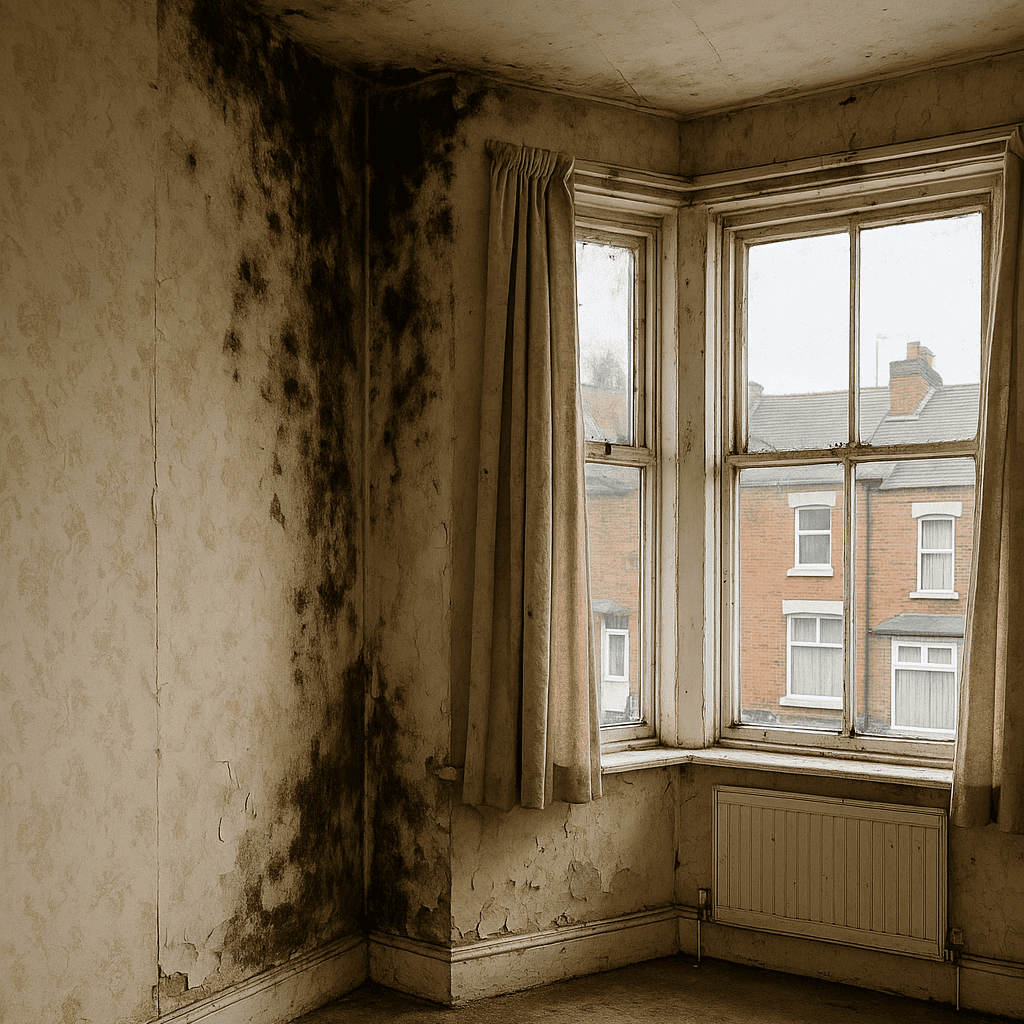
If your landlord failed to fix issues like damp, mould, broken heating, leaking roofs or unsafe electrics—impacting your health, safety or daily life—you may be entitled to significant compensation.
(no obligation – no win, no fee)
What are housing disrepair claims?
Under the Landlord and Tenant Act 1985 and Homes (Fitness for Human Habitation) Act 2018, landlords must maintain rental properties. Claims arise when they neglect to address defects that:
- Cause damp, mould or leaks, leading to health problems like asthma or respiratory conditions.
- Leave heating, hot water or electrics unreliable, affecting safety and comfort .
- Create structural hazards, such as collapsing ceilings or unstable stairs.
- Damage personal belongings or increase costs, such as ruined carpets or excessive energy bills.
Who could be eligible?
You may have a claim if:
- You reported the issue in writing and the landlord failed to act within a reasonable time.
- You suffered inconvenience, health issues, damaged possessions or financial losses as a result.
- You remain in the property (or make a claim within six years of the issue arising).
Typical compensation amounts
- General damages (inconvenience, distress) usually awarded as a percentage of rent, e.g. 10–50% depending on severity.
- Special damages for out-of-pocket costs: repair of personal items (£100 – £10,000+), extra heating bills, temporary accommodation.
- Personal injury compensation for health impacts: £1,000 for minor illness; £10,000+ for long-term conditions like severe asthma.
- Real-world cases: payouts from £3,000–£45,000 in severe mould or structural hazard scenarios.
How to make a claim
Click the button below to start your free assessment and get matched with a specialist solicitor:
(no obligation – no win, no fee)
Legal process & time limits
- Claims must typically be made within six years of the disrepair starting; personal injury has a separate three-year limit.
- Your solicitor may issue a Letter of Claim, followed by an inspection—often by a joint or single expert—before formal proceedings.
- Many cases settle without court action; others proceed via County Court or Housing Ombudsman depending on tenureship.
Why use ConsumerClaims.co?
- Rapid, obligation-free eligibility check
- Match with UK-qualified solicitors, experienced in housing law, working on a no win, no fee basis
- Full support throughout: from evidence gathering to complaint drafting and legal representation
- We are an independent, non-profit service—designed to maximise your redress, not profit from it
FAQs
Will claiming affect my tenancy or credit score?
No—it won’t affect your credit rating. Social tenants are protected from eviction solely for claiming, and private tenants have safeguards against “revenge eviction”.
Can I claim if I no longer live in the property?
Yes — as long as the disrepair occurred within the last six years of living there, you may still claim.
What evidence do I need?
Take photos/videos regularly, keep records of communications and repair schedules, and keep receipts for any expenses or medical treatment.
Can I claim for damaged belongings?
Absolutely. You can seek compensation for items damaged by disrepair—like clothes, electronics, carpets—if you have receipts or proof.